Restored vs Wild Great Wall: Which Should You Walk?
Rebuilt sections are not fake and unrestored ones are not braver. What each kind actually offers, what it demands, and which sections sit at each end.
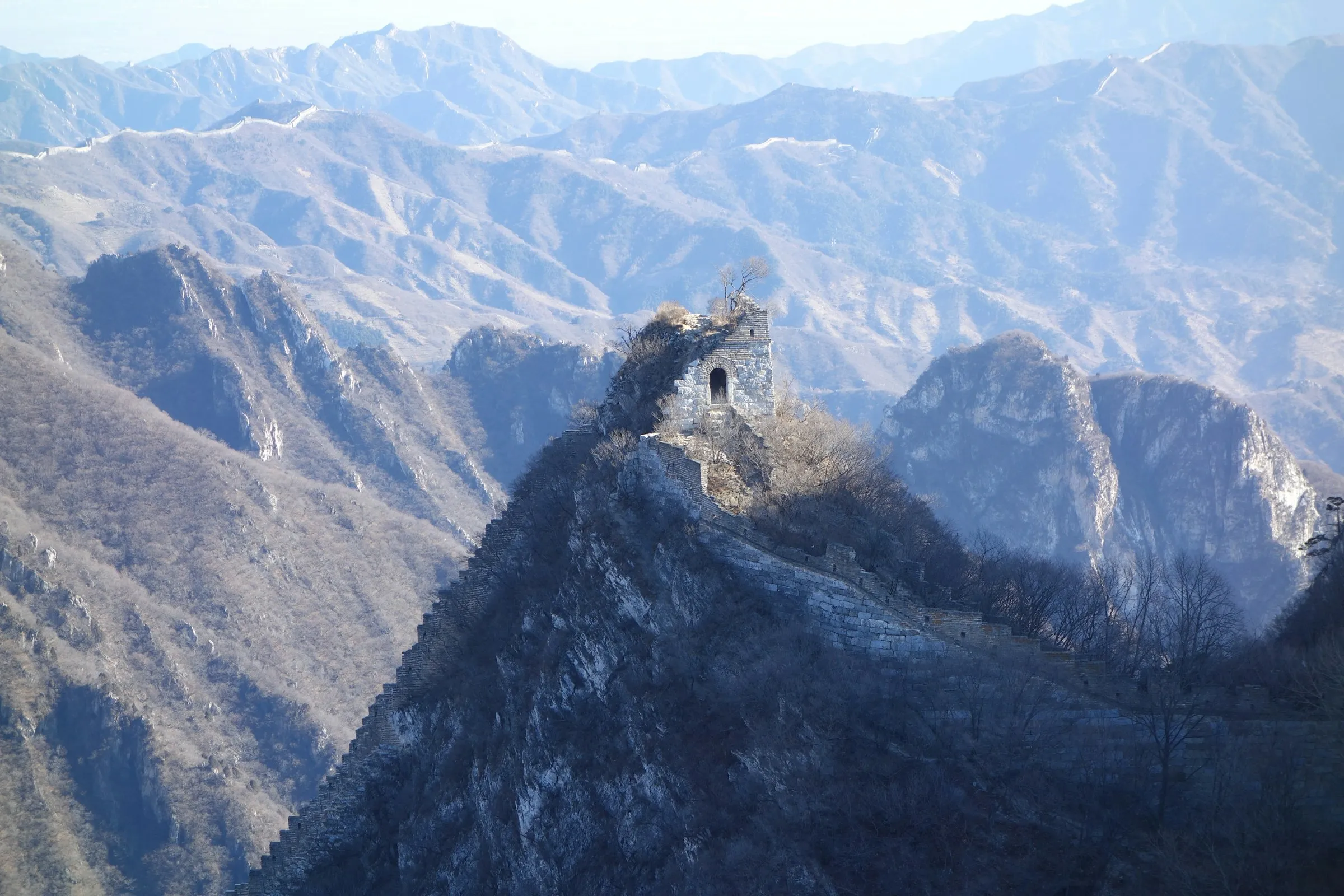
The choice is not between real wall and rebuilt wall. Every section near Beijing is genuine Ming construction; the difference is how much has been repaired since. Restored means even steps, parapets and a surface you can walk without thinking about it. Wild means collapsing stonework, loose footing, no railings and nobody coming to help you — and a landscape almost nobody else is standing in.
Most visitors should walk restored wall and should not feel apologetic about it. The wild sections are worth the risk only when the walk itself is the reason for the trip.
What the words actually mean
| Restored | Partly restored | Wild | |
|---|---|---|---|
| Surface | Even steps, continuous parapet | Maintained near the gate, rough further out | Collapsed masonry, scree, vegetation |
| Safety | Railings in places, staff, rescue access | Thins with distance from the entrance | None of the above |
| Crowds | Moderate to heavy | Light | Almost nobody |
| Facilities | Toilets, food, lifts | Basic at the entrance | Nothing |
| Suits | First visits, families, short days | Walkers who want distance | Experienced hikers with a guide |
Where the sections sit: Badaling, Mutianyu and Juyongguan are fully restored. Jinshanling, Simatai and Huanghuacheng are partly restored — maintained where you arrive, progressively rougher as you walk. Jiankou is the wild one.
How the restored sections got that way
The rebuilding is recent, and it happened in waves. Badaling was prepared for visitors first, opening in 1957; Mutianyu followed decades later, restored in the 1980s along foundations that were already centuries old. What you walk at those sections is Ming wall with a modern surface, rebuilt to carry crowds rather than soldiers.
Conservation thinking has shifted since. The current emphasis is on stabilizing what survives rather than reconstructing what has gone, which is why no new section is likely to be rebuilt to Badaling’s standard — and why the wild stretches will stay wild, gradually becoming less accessible rather than more.
That timeline matters for one practical reason: the difference you are choosing between is not ancient versus modern, but maintained versus abandoned.
The case for restored wall
It is the version that lets you look at the landscape instead of your feet. On a restored section you can bring children, older parents and anyone whose ankles you would rather not test, and you can plan the day to the half hour because nothing about the surface will slow you unexpectedly.
It is also the honest historical experience in one important sense: the Ming wall was a maintained military installation, not a ruin. Walking a repaired parapet is closer to what it was for than picking your way over collapse.
If that is your answer, the decision that follows is which restored section — Mutianyu vs Badaling settles it for most people.
The case for wild wall
Solitude, and a different relationship with the thing. Unrestored wall gives you weathered brick with trees growing out of it, towers that have half fallen into the slope, and long stretches where the only sound is wind. Photographers go for this, and so do people on a second or third visit who have already seen the polished version.
What it costs: real physical risk on loose stone and steep drops, no facilities, patchy phone signal, and no realistic rescue if something goes wrong. This is not adventurous sightseeing — it is hillwalking on ruins.
The middle option most people should take
Partly restored sections give you most of what the wild ones offer with a fraction of the exposure. At Jinshanling you start on maintained wall and walk out into rougher stone at whatever point you decide to stop.
Huanghuacheng does it differently: the wall here runs down to the water and disappears into a reservoir, so the draw is the setting rather than the distance. It is partly restored, quiet on weekdays, closer to Beijing than the other rough sections, and the one to pick if you want unpolished wall without a serious climb.
That gradient — safe where you start, wilder as you continue — is why Jinshanling is the standard recommendation for anyone who says restored wall feels too tidy. It is also why Mutianyu vs Jinshanling is the comparison that follows this page most often.
If you are set on Jiankou
Take a guide who has walked the route recently, not a general Beijing tour operator. Go in a group, start early, and turn back at the first thing that feels beyond you — that decision point is where the accidents happen. Wear proper footwear, carry water and a headlamp, and accept that weather changes the difficulty completely.
Access rules matter here too and have tightened in places: parts of the unrestored wall are signed as closed, and protection rules are enforced locally rather than uniformly. Confirm the position for the stretch you intend to walk before you travel — what to expect at Jiankou covers the section itself, and guided options are on Great Wall hiking tours.
What each kind asks of you physically
Restored wall is steep but predictable: the effort is cardiovascular, and lifts exist at most sections to remove it. Partly restored wall adds uneven footing and long stretches without an exit, so the demand is endurance rather than fitness alone. Wild wall adds scrambling, exposure and route-finding, which is a different skill entirely.
The section-by-section version of that comparison is on is the Great Wall hard to climb.
One test that settles it
Ask what you would do if the weather turned an hour into the walk. On restored wall the answer is trivial: take the lift down, or walk back the way you came on even steps. On partly restored wall it is manageable if you have not gone far. On wild wall it is the question that decides whether the day ends badly — which is why the answer, for almost everyone, is a guide or a different section.
Choosing in one line each
- First Great Wall visit, any age — restored. Mutianyu.
- No car, half a day — restored. Badaling.
- You want to walk for hours — partly restored. Jinshanling.
- You want water and quiet — partly restored. Huanghuacheng.
- You want ruin, and you hike — wild. Jiankou, with a guide.
- You want the wall after dark — partly restored, and only one option: Simatai.
What’s next
- The restored comparison most visitors need: Mutianyu vs Badaling.
- The step beyond restored: what to expect at Jinshanling.
- All seven sections in one place: the best section of the Great Wall.
- If the rebuilding is what puts you off: is the Great Wall worth visiting.
Frequently asked questions
Is the restored Great Wall fake?
Which Great Wall sections are unrestored?
Is it safe to hike the wild Great Wall?
Are you allowed to walk on the wild Great Wall?
Keep planning
- Great Wall Sections Compared: Which to ChooseThe four questions that separate one section from another, which head-to-head answers each of them, and why most visitors only need to read one.
- The Best Section of the Great Wall of China to VisitSeven sections near Beijing make very different days out. A straight verdict for each kind of visitor, and the three questions that decide which one is yours.
- Jinshanling Great Wall: The Section Walkers ChoosePartly restored, thinly visited and built for walking rather than looking. What the ridge is actually like, which gate to start from, and who should not come.
- Jiankou Great Wall: The Unrestored One, HonestlyCollapsed masonry on a knife-edge ridge, no staff and no rescue. Why photographers keep coming, what the risks actually are, and how to decide against it.
- Huanghuacheng Great Wall: The Lakeside SectionQuiet on any weekday, moderately rough underfoot, and reached on the same bus corridor as Mutianyu. What the walking is like, and what this section does not have.
- Mutianyu Great Wall: What to Expect and How to VisitWhat the Mutianyu visit is actually like: the layout tower by tower, which stretch of wall to walk, and how the two lifts and the toboggan fit together.
- Badaling Great Wall: What the Visit Is Really LikeThe section every coach goes to, split into a steep north route and a quiet south one. Which side to walk, when to arrive, and who should go somewhere else.
- Mutianyu vs Jinshanling: Which One Should You Walk?Effort, crowds, photography and the hours each one costs — plus the two questions that settle the choice faster than any comparison table can.
- Great Wall Hiking Tours: Which Route, Which GuideWhere guided walks actually go, what separates a hiking operator from a sightseeing one, and the questions to ask about a route before you pay for it.
- Is the Great Wall of China Hard to Climb?What the steps are actually like, how the sections rank by effort, what a lift removes, and how to judge a stretch before you commit to climbing it.