How Difficult Is the Jinshanling Great Wall Hike?
Partly restored, thinly visited and built for walking rather than looking. What the ridge is actually like, which gate to start from, and who should not come.
- Distance from Beijing
- 130 km
- Drive time
- 150 min
- Restoration
- Partly restored
- Crowds
- Low
- Opening hours
- 06:00–18:00
- Best for
- Long hikes without crowds
Last checked on July 20, 2026.
| Ticket | High season | Low season |
|---|---|---|
| Entrance ticket | CN¥65≈ $10 | CN¥55≈ $8 |
| Cable car, one way | CN¥40≈ $6 | CN¥40≈ $6 |
| Shuttle bus (mandatory) | CN¥10≈ $1 | CN¥10≈ $1 |
Official gate prices in CNY. Online resellers add a service fee. Last checked on July 20, 2026.
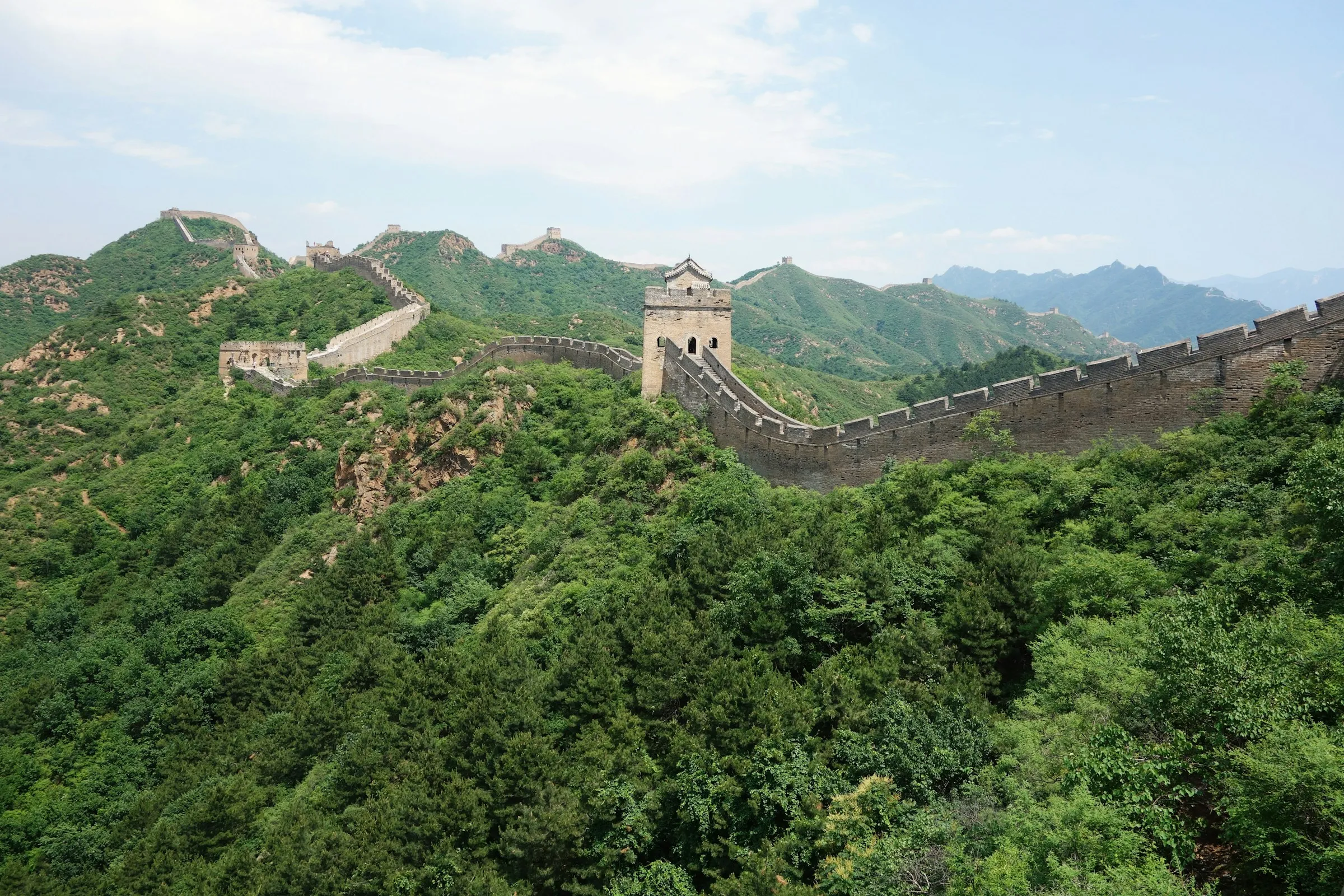
Jinshanling is the section for people who want to walk rather than to look. The wall here runs for kilometers along an open ridge — partly restored, partly left as it was — with watchtowers close enough together that you can measure progress by them, and few enough visitors that you will lose sight of other people for stretches at a time.
The trade is time. This is the furthest of the seven sections in this guide, which is exactly why it stays quiet.
What you are walking on
The open stretch runs roughly ten kilometers from end to end with dozens of watchtowers on it, along with barrier walls, horse-blocking walls and beacon towers that survive here better than at the polished sections. The eastern part is restored enough to walk quickly; further along, the restoration thins and you are on original stone with loose brick and uneven drops.
That mixture is the point. Badaling and Mutianyu show you what the Ming wall looked like when it was maintained; Jinshanling shows you both that and what happened afterwards, within a single walk. If the difference matters to you, restored vs wild Great Wall sets out what each end of that spectrum costs.
Gates, the cable car, and how to start
There is more than one way onto the wall, and the choice shapes the day: one entrance puts you at the eastern end of the restored stretch, another starts you closer to the middle. A cable car runs from the entrance area up to the wall during normal opening hours, which removes the first climb but not the walking.
The practical version for a first visit: take the lift up, walk east to west along the ridge for as long as your legs and the light allow, and turn back with enough margin to reach your transport. Nobody who comes here regrets starting early; plenty regret starting late.
How hard it is
Harder than it looks in photographs. The stairs are uneven, the ascents are sustained rather than short, and the descents are the part that hurts the next day. Several hours of that is a normal Jinshanling visit rather than an ambitious one, and the further west you go, the rougher the surface gets.
What that means in practice:
- Real shoes, not fashion trainers. Grip matters more here than at any restored section.
- Water for the whole walk. There is nothing along the ridge.
- A turnaround time set before you start, because the wall keeps going and daylight does not.
- No handrails to speak of once you are past the maintained stretch.
If that reads as a warning, it is meant to. Anyone who wants the Great Wall without the effort should go to Mutianyu instead — and the comparison between the two is on Mutianyu vs Jinshanling.
Sunrise, and why people stay overnight
Jinshanling is the section photographers name when they talk about light. Sunrise along the ridge is the reason, and the logistics are the obstacle: the lift keeps normal hours, so being on the wall at first light means climbing in the dark, which in turn means sleeping nearby rather than in Beijing.
That is a decision about the trip, not about the section: it converts a long day into an overnight one, and it is the only way the sunrise version works. Guided hikes that include it are on Great Wall hiking tours.
The walk toward Simatai
The route west from Jinshanling toward the Simatai side is the best-known long walk on the Great Wall, and its status has not been constant: the two areas are managed separately, and access at the far end has been restricted at times.
Treat it as a plan that needs confirming on the day rather than a guarantee, and if the crossing is the reason for your trip, book with an operator who will tell you before you travel rather than at the trailhead. How the two sections differ is on Jinshanling vs Simatai.
When to come
Autumn is the season here, for the same reason as everywhere on the wall but more so: clear air on an exposed ridge and low sun along the towers. Spring is second. Summer is walkable early and punishing by midday, with no shade at all. Winter is superb and serious — ice on stone stairs with no handrails is a different proposition from cold in the city.
Crowds are not the problem they are elsewhere, so choose the date for weather rather than for the calendar. The exception is the national holiday week, when even here it fills up.
Staying nearby
If you are staying, choose on three things rather than on the room: how far the guesthouse is from the gate you intend to start at, whether it will arrange a pre-dawn start and a packed breakfast, and whether anyone there can deal with a booking question in English. Village accommodation below the wall ranges from basic to comfortable, and the difference that matters at five in the morning is the first of those three.
The options and what to look for are on staying overnight near the Great Wall.
Getting there and getting back
Jinshanling is the longest run of the seven sections, served by a single tourist bus line rather than the city network, which makes the return leg the thing to plan first. Most visitors come with a driver or on a booked trip for exactly that reason — the options are on getting to Jinshanling and Simatai.
Entry is booked online in advance under real-name rules like everywhere else on the wall: how to book Great Wall tickets online.
Who should come here
Yes — walkers, photographers, anyone on a second visit to the Great Wall, and anyone whose main objection to Badaling is other people.
No — short trips, small children, anyone who tires on stairs, and anyone whose day depends on being back in Beijing by a fixed hour.
What’s next
- Comparing it with the standard choice: Mutianyu vs Jinshanling.
- Walking it with a guide: Great Wall hiking tours.
- Getting there: Jinshanling and Simatai transport.
| Option | Duration | Cost |
|---|---|---|
| Public bus通游专线33 (holiday tourist line)Wangjing West · public holidays only · seasonalFirst 08:00 · Last back 16:00 | 2h 10m | CN¥90≈ $15CN¥50 by transit card or QR |
| Organised tourBeijing hotels · departs daily | 10h | CN¥450≈ $65 |
Prices and timetables change — figures below were last checked on July 20, 2026.
Frequently asked questions
Is Jinshanling worth the extra travel?
How hard is the Jinshanling hike?
Can you hike from Jinshanling to Simatai?
Is Jinshanling good for sunrise?
Keep planning
- The Best Section of the Great Wall of China to VisitSeven sections near Beijing make very different days out. A straight verdict for each kind of visitor, and the three questions that decide which one is yours.
- Mutianyu Great Wall: What to Expect and How to VisitWhat the Mutianyu visit is actually like: the layout tower by tower, which stretch of wall to walk, and how the two lifts and the toboggan fit together.
- Simatai Great Wall: The Section You Visit at NightSteep, partly unrestored and attached to a resort town, Simatai is the only wall open after dark. What that costs you in flexibility, and what it buys.
- Mutianyu vs Jinshanling: Which One Should You Walk?Effort, crowds, photography and the hours each one costs — plus the two questions that settle the choice faster than any comparison table can.
- Jinshanling vs Simatai: Which Wild-Side Section?Effort, crowds, the resort at the foot of one of them, the hike that links them, and what each is worth once you have made the long drive out.
- Restored vs Wild Great Wall: Which Should You Walk?Rebuilt sections are not fake and unrestored ones are not braver. What each kind actually offers, what it demands, and which sections sit at each end.
- Great Wall Hiking Tours: Which Route, Which GuideWhere guided walks actually go, what separates a hiking operator from a sightseeing one, and the questions to ask about a route before you pay for it.
- How to Get to Jinshanling Great Wall from BeijingA tourist bus line to Jinshanling, a resort shuttle to Simatai, and a driver for anyone who would rather not watch the clock. What leaves from where.
- How to Book Great Wall of China Tickets Online 2026Great Wall tickets are sold online under real-name rules, and the busiest sections hit a daily quota. How to book with a passport and what happens at the gate.
- Staying Overnight Near the Great Wall of ChinaWhich sections have somewhere worth sleeping, what a village guesthouse gives you that a Beijing hotel cannot, and when the extra night is not worth it.