Is Mutianyu Worth Visiting on the Great Wall of China?
What the Mutianyu visit is actually like: the layout tower by tower, which stretch of wall to walk, and how the two lifts and the toboggan fit together.
- Distance from Beijing
- 73 km
- Drive time
- 90 min
- Restoration
- Fully restored
- Crowds
- Medium
- Opening hours
- 07:30–21:00
- Best for
- A first, easy visit
- Tickets at the gate
- Advance booking only
Last checked on July 20, 2026.
| Ticket | All year |
|---|---|
| Entrance ticket | CN¥40≈ $6 |
| Child / student entrance | CN¥20≈ $3 |
| Shuttle bus (mandatory) | CN¥15≈ $2 |
| Cable car, return | CN¥140≈ $20 |
| Cable car, one way | CN¥100≈ $15 |
| Chairlift, return | — |
| Toboggan ride down | CN¥100≈ $15 |
Official gate prices in CNY. Online resellers add a service fee. Last checked on July 20, 2026.
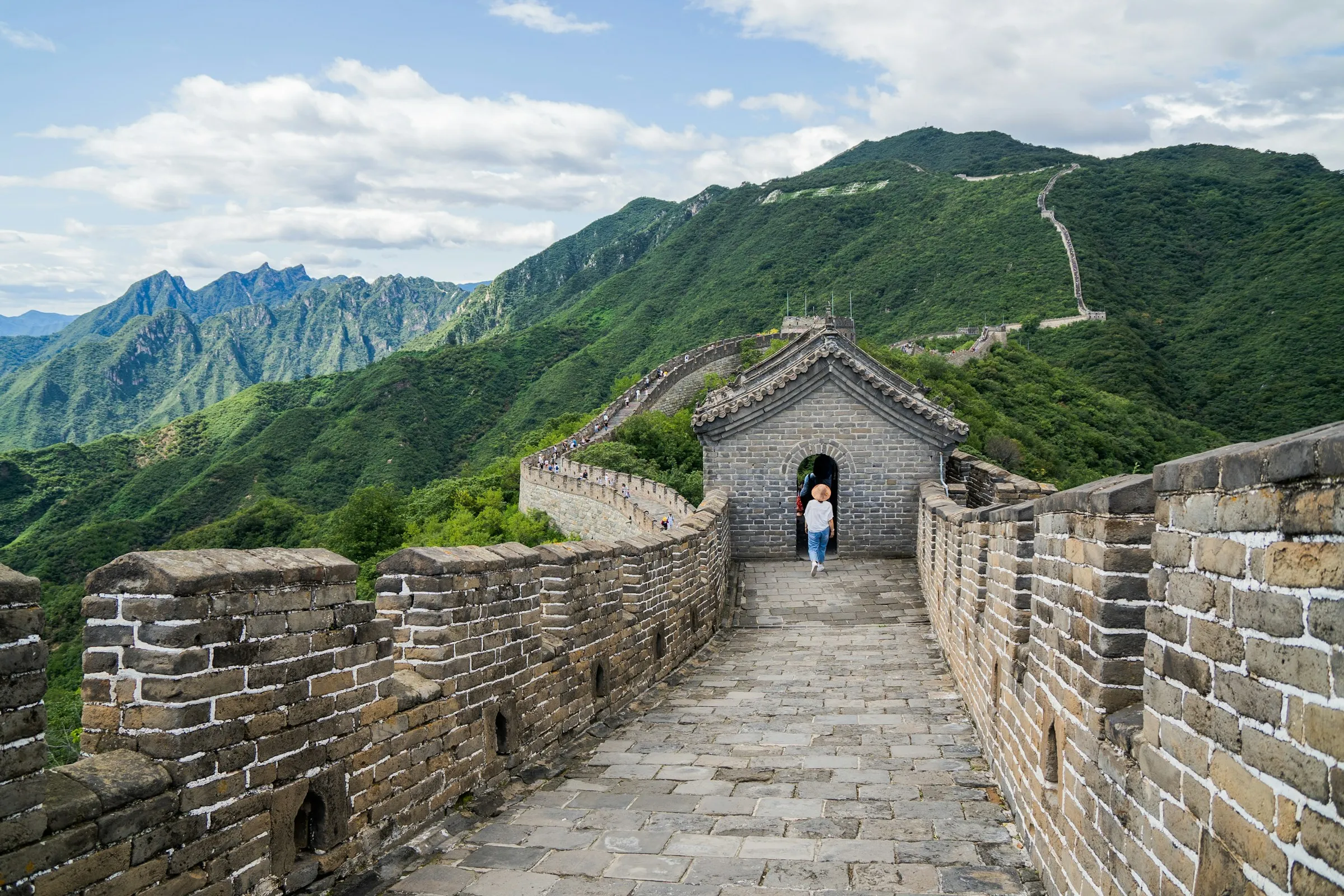
Mutianyu is the section most first-time visitors should pick, and the reason is the walking rather than the wall: restored rampart along a wooded ridge, towers close enough together that you always have somewhere to aim for, and a fraction of Badaling’s crowd on the same day of the week.
What you are actually looking at
The open stretch runs about three kilometers along the ridge, with twenty watchtowers on it. It stands on much older foundations — a Northern Qi structure from the sixth century — but what you walk on is Ming: rebuilt in 1569 under the generals Tan Lun and Qi Jiguang as part of the defensive line guarding the approaches to the capital, and restored again in the 1980s, which is why the parapets are continuous and the stairs are safe.
Two things distinguish it from the other restored sections. The battlements are crenellated on both sides — unusual, and a sign this stretch expected trouble from either direction. And the hillside is densely wooded, so the wall reads as a line drawn through forest rather than across bare rock. That is what makes October here worth planning a trip around.
The layout: two lifts, three stretches
The open section is numbered from Tower 1 in the east to Tower 20 in the west, and it splits naturally into three parts:
| Stretch | Character | Reached by |
|---|---|---|
| Towers 1–6 | Steep and stepped, the quietest end | Walking up, or the chairlift to the Tower 6 area |
| Towers 6–14 | The easy middle, gentle grades, best for a relaxed walk | Either lift, then along the ridge |
| Towers 14–20 | Climbs to the Hero Platform, the high point and the best views | Cable car to the Tower 14 platform, then west |
The cable car lands you at the Tower 14 viewing platform; the chairlift serves the Tower 6 end, and the toboggan runs back down from there. Walking the middle stretch one way takes roughly thirty minutes to an hour depending on how often you stop, which is the single most useful number for planning your day.
Three ways to walk it
The standard visit. Cable car up to Tower 14, walk west toward the Hero Platform as far as your legs and the crowd allow, come back to Tower 14, then either ride down or walk east along the middle stretch to the chairlift and take the toboggan. This is what most people do, and it works.
The quiet version. Go up at the Tower 6 end first, walk east into the steep low-numbered towers before anyone else gets there, then double back along the middle. You trade the famous views for solitude in the first hour.
The full walk. End to end and back, on foot both ways, no lifts. It is a proper half-day of stairs, and worth it only if walking is the point of the trip rather than the wall.
Whichever you pick, the sensible tactic is the same: get above the arrival point early, because the crowd concentrates within a few hundred meters of whichever lift station is busiest.
Getting up: cable car, chairlift, or your own legs
Walking up from the base takes most people the best part of an hour of continuous stairs before the wall even starts. It is entirely doable and it is free, but it spends the energy you wanted for the ridge.
The cable car is an enclosed gondola and the sensible default: it is the fastest way onto the best stretch, and it runs in weather that stops the open-air options. The chairlift is open and pairs with the toboggan, which is the ride children remember and the reason many families choose this section over Badaling. Neither is included in admission, and the shuttle bus between the parking lot and the lift stations is separate again — the full breakdown is on cable car vs toboggan.
How long to allow
Three to four hours on the wall is comfortable for the standard visit, and that is before travel. Add the shuttle at both ends, the queue for the lift on a weekend, and lunch, and a Mutianyu day trip from Beijing occupies from early morning to mid-afternoon. If your schedule is tighter than that, the honest answer is not to rush this section but to accept you will see the middle stretch only.
When to go
Time of day matters more than season for crowds. The first hour after opening is quiet even in summer; by late morning on a weekend the stretch nearest the cable car fills up. Arriving early also gets you the low sun that makes the ridge photograph well.
Season. Late September through early November is the section at its best — clear air, cool walking, and the forest turning. It is also the busiest weekend period of the year, so a weekday matters more in autumn than at any other time. Summer is hot and hazy but green; winter is cold, clear and nearly empty, with the toboggan the first thing to close in bad weather. More on timing across the year in the best time to visit the Great Wall.
Practical details on the day
- Shoes matter more than fitness. The steps are uneven, worn smooth in places, and there are no handrails on much of the parapet.
- Water and sun. There is little shade on the wall itself despite the forest below, and the towers funnel wind rather than shelter you.
- Facilities cluster around the lift stations and the base village, not along the wall. Plan accordingly before you set off along the ridge.
- Food. The restaurants sit below the wall near the parking lot and the village, and it is a long way back once you are up.
- Drones. Bringing one is not straightforward here, and permission is routinely refused at managed sections — check the current rules before you pack one, starting with drone rules at the Great Wall.
Getting there from Beijing
Mutianyu has no railway station and no single direct bus: the public route is the 916 Express from Dongzhimen to Huairou, then a local H-series bus to the Mutianyu roundabout, and the connection is where DIY trips lose time. A car, a private transfer or a tour is faster and lands you at the parking lot. Step-by-step options are on how to get to Mutianyu by bus, and the packaged version is Great Wall tours from Beijing.
What you need to buy before you go
Admission, the shuttle bus and each lift are sold separately, and everything is booked in advance under real-name rules tied to your passport. Buy the combination you actually intend to use rather than a return lift ticket you will not need — book tickets covers ticket types, and how to book Great Wall tickets online covers the booking mechanics.
Is Mutianyu the right section for you?
Yes, if you want restored wall, real views and a manageable day, and you can arrange transport that is not a two-leg bus trip. No, if you are relying on public transport alone and are short on time — Badaling has trains — or if what you came for is unrestored wall, in which case Jinshanling and Jiankou are your sections.
The full head-to-head is Mutianyu vs Badaling; the wider field is on the best section of the Great Wall.
What’s next
- Planning the day: how to get to Mutianyu by bus.
- Deciding on the lifts: cable car vs toboggan.
- Comparing sections: Mutianyu vs Badaling.
| Option | Duration | Cost |
|---|---|---|
| Public bus916 express + H23Dongzhimen Transit Hub · every 10–15 min | 2h 30m | CN¥16≈ $2 |
| Public bus通游专线31 (holiday tourist line)Wangjing West · public holidays onlyFirst 09:45 · Last back 15:30runs only once 15 passengers have booked | — | CN¥80≈ $10 |
| Public bus867Dongzhimen Transit Hub · a few departures a day · seasonal | 2h 20m | CN¥20≈ $3 |
Prices and timetables change — figures below were last checked on July 20, 2026.
Frequently asked questions
How long do you need at Mutianyu?
Is there a toboggan at Mutianyu?
Is Mutianyu hard to climb?
Which towers should I walk between at Mutianyu?
Keep planning
- The Best Section of the Great Wall of China to VisitSeven sections near Beijing make very different days out. A straight verdict for each kind of visitor, and the three questions that decide which one is yours.
- Badaling Great Wall: What the Visit Is Really LikeThe section every coach goes to, split into a steep north route and a quiet south one. Which side to walk, when to arrive, and who should go somewhere else.
- Mutianyu vs Badaling: Which Section to ChooseSame restored wall, two very different days out. How Mutianyu and Badaling compare on crowds, climbing, lifts and transport — plus a verdict for your trip.
- Great Wall of China TicketsThere is no single Great Wall ticket. What each section charges, how the real-name booking rules work, and which extras you have to buy separately.
- Mutianyu Great Wall Tickets: Which Ones You NeedAdmission, shuttle, cable car, chairlift and toboggan are separate tickets at Mutianyu. Which combination to buy, and which gate each one sends you to.
- How to Get to Mutianyu by Bus from BeijingThe public route is two buses with one transfer at Huairou, and the transfer is where the day is won or lost. Where to board, what to avoid, how to get back.
- Great Wall Tours from Beijing: How to Pick OneWhat a Great Wall tour from Beijing actually includes, how shopping-stop tours differ from clean ones, and which section, group size and pickup option to book.