Why Visit Simatai Great Wall at Night?
Steep, partly unrestored and attached to a resort town, Simatai is the only wall open after dark. What that costs you in flexibility, and what it buys.
- Distance from Beijing
- 120 km
- Drive time
- 140 min
- Restoration
- Partly restored
- Crowds
- Low
- Opening hours
- 09:00–17:00
- Best for
- Evening and night visits
Last checked on July 20, 2026.
| Ticket | All year |
|---|---|
| Entrance ticket | CN¥40≈ $6 |
| Cable car, return | CN¥200≈ $30 |
| Shuttle bus (mandatory) | CN¥20≈ $3 |
Official gate prices in CNY. Online resellers add a service fee. Last checked on July 20, 2026.
Simatai is the only stretch of the Great Wall you can walk after dark, and that single fact shapes everything about visiting it. The wall sits above Gubei Water Town, a purpose-built resort that lights the towers, runs the cable cars and controls the evening entrance — so the evening visit is genuinely unlike anywhere else on the wall, and it comes with less freedom than any other section.
By daylight it is something else again, and it is also a great deal more ordinary than the evening version suggests: a steep, partly unrestored, quiet section with its own gate outside the resort, which you can visit for the price of admission without setting foot in the town.
What makes Simatai different
Three things, in order of how much they affect your day:
- The resort. The wall is reached through Gubei Water Town, which means entry, transport up and timing are bundled rather than independent.
- The night opening. A stretch of towers is lit and staffed in the evening, with cable cars running to it — the reason most people come.
- The wall itself. Steep, narrow in places, with sections left unrestored. It is closer in character to Jinshanling than to Mutianyu.
The night visit, and how it is sold
There is no standalone evening wall ticket, and the reason is physical rather than commercial: the night entrance is inside Gubei Water Town. The outer gate that day visitors use is shut by then, so the only way to reach the evening turnstile is through the town — which means a resort ticket every time.
That leaves two ways to buy it, not one: bundled as a single product — resort, wall and a round-trip cable car together — or as an add-on bought once you are already inside the town, which costs a little more. Every evening ticket includes the cable car both ways; a version without it does not exist. The lit route is short by design, roughly one span between two towers, against the ten towers open in daylight.
What that means practically:
- The deadline is the town, not the wall. Admission to Gubei Water Town closes at 20:30 from May to October and 19:30 from November to April, while the wall gate above it keeps checking tickets until 21:40. Arrive after the town has shut and a paid evening ticket gets you nowhere.
- You book a date, not a session. There are no timed slots here and no published daily cap — the resort’s booking system has the slot mechanism switched off entirely.
- Budget for the evening, not the wall. You are buying an evening at the resort with the wall included.
- Staying in the town changes the arithmetic. Hotel guests are handled differently from day visitors — the resort tells them not to buy this ticket at all — which is why many people who do the night visit sleep there — staying overnight near the Great Wall.
By daylight
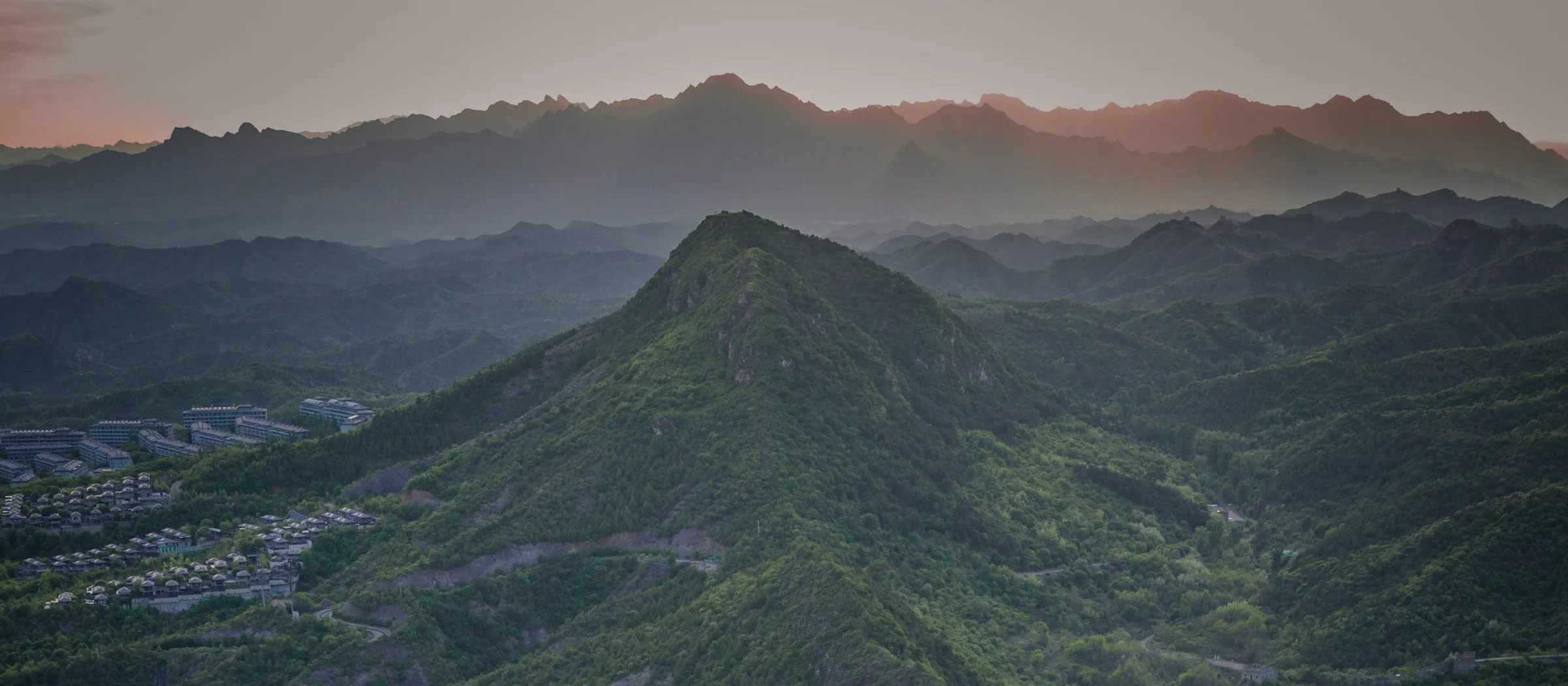
Without the lights, Simatai is a steep, sparsely visited section with genuine character: original stonework alongside restored stretches, towers strung along a sharp ridge, and views down over the water town that make the resort look small.
By day it has its own entrance, outside the resort, next to the shuttle stand — so the daytime visit is an ordinary wall ticket at an ordinary gate, with none of the evening’s bundling. The catch is the clock: that outer gate stops checking tickets at 15:00, more than an hour before the gate inside the town does, and the section clears at 16:30. Turning up at half past three without a resort ticket is the way this goes wrong.
The walking is demanding. Gradients are unforgiving, some stairs are narrow, and the further you go the less restored the surface becomes. A cable car covers the ascent, which turns a hard day into a manageable one, but it does not flatten the wall.
If the wall itself is what you came for rather than the evening, Jinshanling gives you more of it for the same travel time — the two are compared on Jinshanling vs Simatai.
The walk toward Jinshanling
The classic long route runs between the two sections. The areas are managed separately, and access at this end has been restricted at times. Do not build a day around it without confirming first, and treat any operator who is vague about it as a warning.
The resort you pass through
Gubei Water Town is a built-from-new canal town at the foot of the wall: lanes, waterways, restaurants, shops and hotels, lit in the evening. It is not a historic village and does not pretend to be one, and how you feel about that decides how you feel about Simatai as a destination.
Practically it works in your favour. It is the only place near a Great Wall section where dinner, a bed and the wall itself are within walking distance of each other, which is what makes the evening visit feasible at all. It also means queues, ticket desks and a schedule — a managed experience rather than an independent one.
How long you need
The night visit is an evening, not an hour: allow time for the town before the cable car and for dinner afterwards, because the wall portion is short by design. Coming out from Beijing and back on the same evening makes for a very long day, and the drive is done in the dark both ways.
A daytime visit is a normal half-day on the wall plus the long journey. Doing both — the ridge by day, the towers lit at night — is the version that justifies staying over, and the reason a large share of Simatai visitors do exactly that.
For where the good frames are, in both versions, see the best photo spots on the Great Wall.
When to come
Evening, spring through autumn is the version most people want, and warm months are when the resort is at its best — the wall is exposed and the temperature drops sharply after sunset in any season.
Autumn daytime is the best walking, as everywhere on the wall. Winter is clear and very cold, and the evening visit becomes a question of how long you can stand still outdoors. Summer is humid, but the night visit sidesteps the worst of the heat, which is part of its appeal.
Getting there
Simatai is one of the two far sections, reached from Beijing by a resort shuttle service or by road, and the journey is long enough that most visitors either stay overnight or take a booked trip built around the evening. The options are on getting to Jinshanling and Simatai, and the packaged evening versions are on Great Wall sunset and night tours.
Simatai is the exception to the real-name rule. Unlike Badaling and Mutianyu, the resort does not tie tickets to an identity document: an order takes a name and a phone number, and you enter by scanning the order’s QR code. What it does not solve is payment: the resort’s own site registers accounts against a Chinese mobile number and offers no country selector, and the only official instruction for foreign visitors is to book in person at the ticket office by the visitor centre. How the booking works at the sections that do use real-name rules is on how to book Great Wall tickets online.
Who should come here
Yes — anyone who wants the wall after dark, photographers, and travelers on a second visit who have already done the restored sections in daylight.
No — a first Great Wall visit on a tight schedule, families who want a simple day out, and anyone who wants the evening without paying for the resort, because that combination does not exist. Wanting a plain wall ticket is not a reason to stay away: by day that is exactly what Simatai sells, at its own gate.
Maybe — walkers, who will get more out of Jinshanling unless the night visit is the point.
What’s next
- The comparison that decides it: Jinshanling vs Simatai.
- Evening trips from Beijing: Great Wall sunset and night tours.
- Sleeping near the wall: staying overnight near the Great Wall.
| Option | Duration | Cost |
|---|---|---|
| Public busGubei Water Town shuttleWangjing West · a few departures a dayFirst 09:00 · Last back 17:00 | 2h | CN¥48≈ $7 |
| Organised tourBeijing hotels · departs daily | 11h | CN¥520≈ $75 |
Prices and timetables change — figures below were last checked on July 20, 2026.
Frequently asked questions
Why is Simatai the only Great Wall section open at night?
Can you buy a Simatai night ticket on its own?
Is Simatai steep?
Can you walk from Jinshanling to Simatai?
Keep planning
- The Best Section of the Great Wall of China to VisitSeven sections near Beijing make very different days out. A straight verdict for each kind of visitor, and the three questions that decide which one is yours.
- Jinshanling Great Wall: The Section Walkers ChoosePartly restored, thinly visited and built for walking rather than looking. What the ridge is actually like, which gate to start from, and who should not come.
- Jinshanling vs Simatai: Which Wild-Side Section?Effort, crowds, the resort at the foot of one of them, the hike that links them, and what each is worth once you have made the long drive out.
- Restored vs Wild Great Wall: Which Should You Walk?Rebuilt sections are not fake and unrestored ones are not braver. What each kind actually offers, what it demands, and which sections sit at each end.
- Great Wall Night Tour and Sunset Trips: What RunsWhich evening products actually exist, what the Simatai package covers, why sunrise is a separate booking, and how the return time shapes the whole day.
- How to Get to Jinshanling Great Wall from BeijingA tourist bus line to Jinshanling, a resort shuttle to Simatai, and a driver for anyone who would rather not watch the clock. What leaves from where.
- How to Book Great Wall of China Tickets Online 2026Great Wall tickets are sold online under real-name rules, and the busiest sections hit a daily quota. How to book with a passport and what happens at the gate.
- Staying Overnight Near the Great Wall of ChinaWhich sections have somewhere worth sleeping, what a village guesthouse gives you that a Beijing hotel cannot, and when the extra night is not worth it.
- Best Photo Spots on the Great Wall of ChinaWhich sections give which shot, where to stand once you are up there, what the light does through the day, and the frames that are not worth the risk.